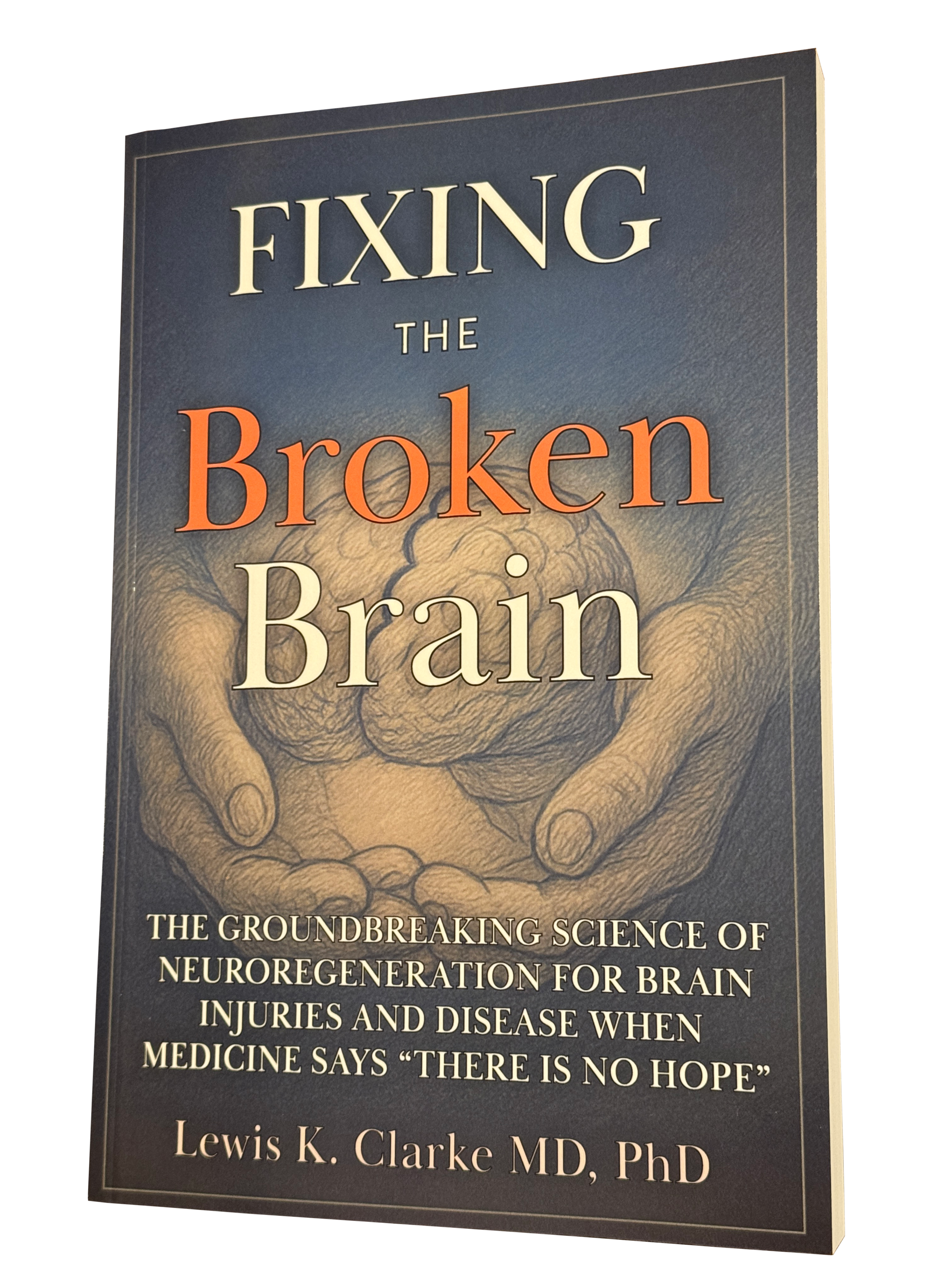
The book by Lewis K. Clarke, M.D., Ph.D.
Fixing the Broken Brain
The Groundbreaking Science of Neuroregeneration for Brain Injuries and Disease When Medicine Says “There Is No Hope”
For most of the last century, medicine taught that the brain could not repair itself. It turns out that it can. This book explains how the brain breaks, how it rebuilds, and what the science says we should be doing about it now.
The belief
So why has so little changed in a hundred years?
In the early 1900s, Santiago Ramón y Cajal proposed that we are born with a fixed number of neurons. Lose them to a stroke or an injury and they are gone. That remained the gospel for the next seventy years.
Then, in the 1990s, researchers found neural stem cells in the adult brain, sitting in “nurseries,” waiting for the right chemical signals to mature into neurons and glial cells. We now know they are present even into our nineties.
Yet clinical practice has barely moved. A concussion still gets rest. A stroke survivor gets a few weeks of therapy. A dementia patient gets a drug that manages symptoms for a while and then stops working.
Dr. Clarke names two reasons. The brain is the black box of the body, and medicine has been trained to think in terms of one drug for one disease.
“Brain injury is not like strep throat, where a single antibiotic will fix it in ten days.”From Chapter 1
The nervous system is a chemical symphony. Hundreds of instruments have to play in time and in tune. This book is about inviting the rest of the orchestra to the concert.
The science
How the brain breaks
Whether the cause is a stroke, a concussion, or a disease that unfolds over decades, Dr. Clarke shows that injured brain tissue follows the same prescribed pattern. He calls it the neurodestructive sequence.
Immediately
Phase IFree radicals
Cell membranes rupture and release reactive oxidants. They attack the membranes of neighboring cells, and the damage spreads outward cell by cell.
A ten-year-old’s answer“Add antioxidants and scavenge those free radicals.”
Within minutes
Phase IIExcitotoxicity
Glutamate, the brain’s main excitatory neurotransmitter, spills out of damaged cells and pushes surrounding neurons and glia to self-destruct.
A ten-year-old’s answer“Get rid of the toxins or neutralize them somehow.”
Within hours
Phase IIINeuroinflammation
A cytokine and chemokine storm opens the blood-brain barrier. Immune cells and fluid pour in, causing swelling and still more damage to healthy tissue.
A ten-year-old’s answer“Put out the inflammatory fire.”
Dr. Clarke argues that a child shown this list would get an A+. Medicine, with its single-drug habit, has mostly skipped the assignment. Arresting this sequence, he writes, should be the first priority in every neurologic injury, stroke and disease. The book’s appendix walks healthcare professionals through the full molecular biology.
The plan
The Neurorestoration Protocol
If hail tears shingles off your roof, you stop the leak first, then you rebuild the roof. The book applies the same logic to the brain, in three parts.
Arrest the Neurodestructive Sequence
Contain the free radicals, excitotoxicity and inflammation that keep expanding the damage long after the initial event.
The Neuroregenerative Symphony
Support neuroprotection and supply the biochemistry that drives neural stem cells to mature into new neurons and glial cells.
Neuroplasticity & Synaptic Guidance
Guide new axons to their synaptic targets through physical, occupational and speech therapy. You still have to practice to play the piano.
Chemistry + Therapy = Restoration of Function
The equation at the center of the bookWhat’s inside
What you will understand by the last page
Why the damage keeps spreading after the injury. The three phases of the neurodestructive sequence, and why the patient with a weak arm in the ER can be fully paralyzed on that side two days later.
How the adult brain makes new brain. Neural stem cells, neurogenesis, BDNF and nerve growth factor, and the sigma-1 receptor’s role in turning stem cells into working neurons.
How to see new connections form. What EEG coherence measures, and why it can show changes in brain connectivity that an MRI or CT scan cannot.
Why the brain runs on its mitochondria. The carnitine shuttle, CoQ10 and oxidative phosphorylation, explained with a steam locomotive and a furnace.
What cholesterol is actually doing in your brain. Why the same pathway that makes cholesterol also makes CoQ10, and a full chapter on what the research says about cholesterol and the brain.
Where conventional treatment stops, and why. An unflinching look at the amyloid story, the limits of dopamine replacement, and the “rest and Tylenol” standard of care.
Who it’s for
Written for two readers at once
Patients & families
For the person sitting at the bedside
If someone you love has had a stroke, a brain injury, or a diagnosis that came with the words “nothing more we can do,” this book explains what is happening inside their brain and what the research suggests may help. Where the science gets dense, Dr. Clarke tells you to read for the idea and keep going.
Healthcare professionals
For the clinician who trained years ago
Neural stem cells, neurosteroids and the sigma-1 receptor were not in most medical school curricula. For physicians, therapists and nurses, the book serves as an update on the literature, with a mechanistic framework you can test and critique.
“I find that most of my patients want to know the why.“From the Introduction
“I am not claiming that I have a cure for neuropathologies.”Dr. Lewis Clarke, Introduction
This book will not sell you a miracle. It will help you wade through the hype and the hucksters.
What it offers is a synthesis of state-of-the-art neuroscience, organized into testable hypotheses and a practical framework, from a physician who has spent more than four decades applying it at the bedside and a research career studying it in the lab.
Dr. Clarke is direct about where the evidence is strong, where it is early, and where conventional medicine has fallen behind its own science. As he puts it: dogma destroys discovery.
About the author
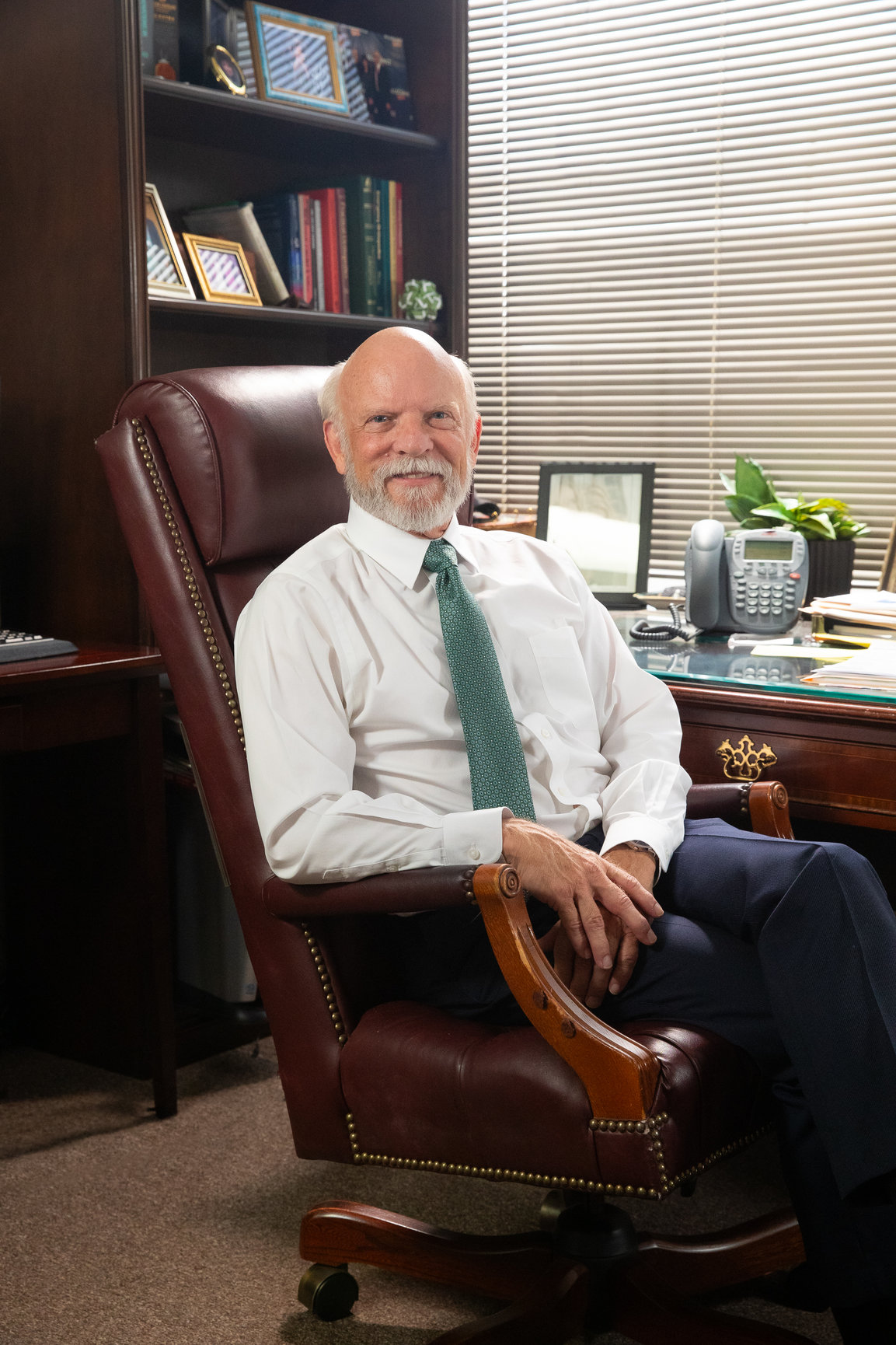
Lewis K. Clarke, M.D., Ph.D.
Board-Certified Physiatrist · Ph.D. Neuroscientist · Author
Dr. Lewis K. Clarke is a board-certified physical medicine and rehabilitation physician and a Ph.D. neuroscientist with more than four decades of experience in neurochemistry, neuropharmacology, and patient care. He is one of a small number of clinicians who hold both an M.D. and a Ph.D., and who have spent their careers treating stroke and brain-injury patients while contributing to the basic neuroscience research literature.
Known to patients and colleagues as “Doc,” he maintains a private physiatry practice in the greater Houston area. He serves as Senior Medical Advisor at the University of Houston–Clear Lake Health and Human Performance Institute, and as an independent investigator he conducts clinical research on neurological recovery in collaboration with PAM Health.
Education & training
- B.A.
- Baylor University, Waco, Texas
- M.S.
- University of Texas at Dallas
- Ph.D., Neurochemistry
- UT Southwestern Medical Center, Cell Biology program
- M.D.
- Texas Tech University School of Medicine
- Internship, Internal Medicine
- Emory University, Atlanta
- Residency, PM&R
- Baylor College of Medicine, Houston
Honors & research
- 1980–1982
- NIH National Research Service Award, Predoctoral Fellow, UT Southwestern Cardiopulmonary Division
- 1982–1983
- NIH National Research Service Award, Dept. of Physiology, Texas Tech
- 1982–1986
- Teagle Foundation Scholarship for the Study of Medicine
- 2014
- Invited chapter, Springer’s Platelet-Rich Plasma
- Conferences
- Session chairman, international regenerative medicine conferences
Questions
Before you buy
Is this too technical for a family member to read?
Dr. Clarke wrote it for two audiences at once. Some chapters are science-heavy for healthcare professionals, and he recommends that families read those sections to get the idea rather than every detail. Every concept is anchored in plain analogies: a leaking roof, a car that won’t start, a young pianist learning a song.
Does the book claim to cure brain injury or disease?
No. Dr. Clarke says so plainly in the introduction. The book presents the science of how the brain is damaged and how it repairs, and proposes a framework for applying that science alongside conventional care.
Which conditions does it cover?
Stroke, traumatic brain injury and concussion, Alzheimer’s and other dementias, Parkinson’s disease, multiple sclerosis, ALS and Huntington’s disease. The same neurodestructive sequence runs through all of them, which is why the book treats them together.
What formats are available?
Fixing the Broken Brain is available in paperback, sold directly through this site.
Is this medical advice?
No. The book is educational. Talk to your healthcare professional about your individual situation, and consider bringing the book to that conversation.
Fixing the Broken Brain
The brain wants to heal.
Understand how.
More than four decades of neuroscience and bedside medicine, in one book for patients, families and clinicians.
I am Dr. Lewis Clarke. The brain wants to heal. Let us help it.