
Dr. Lewis K. Clarke, M.D., Ph.D.
A physician-scientist with more than four decades spent on both sides of the divide — treating patients on hospital rounds while contributing to the neuroscience research literature.
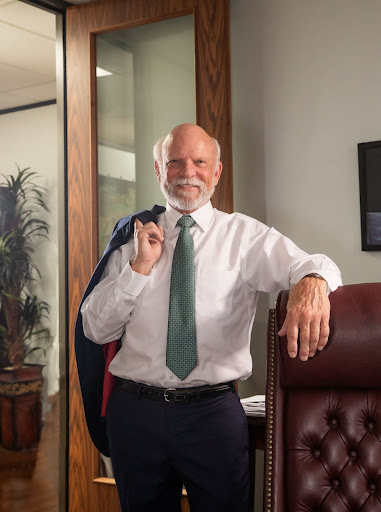
Dr. Lewis K. Clarke is a board-certified physical medicine and rehabilitation physician and a Ph.D. neuroscientist with more than four decades of experience in neurochemistry, neuropharmacology, and patient care. He is one of a small number of clinicians who hold both an M.D. and a Ph.D. — and who have spent their careers treating stroke and brain-injury patients while contributing to the basic neuroscience research literature.
Known to patients and colleagues as “Doc,” he maintains a private physiatry practice in the greater Houston area. He serves as Senior Medical Advisor at the University of Houston–Clear Lake Health and Human Performance Institute, and as independent investigator he conducts clinical research on neurological recovery in collaboration with PAM Health — studying, in an inpatient hospital setting, how the neurochemistry of recovery can be applied alongside conventional rehabilitation.
For most of my career, the frontier of neuroscience and the reality of bedside medicine sat on opposite sides of a gap almost no one was crossing. My work has been to close it — to take what the research literature actually knows about how the brain repairs itself and put it to work for the person in the room. The brain wants to heal. My role is to give it the raw materials, and the reasons, to do so.
The chemistry creates the conditions for new neurons and new connections to form. The therapy — repetitive, targeted, and consistent — trains those connections into working networks. Function is what results when both are done together.
Rehabilitation medicine, meet applied neuroscience.
Dr. Clarke integrates conventional physical, occupational, speech, and cognitive therapies with the neurochemistry of how the brain rebuilds itself. His work spans four connected areas.
Stroke & Brain Injury Rehabilitation
His core expertise, developed over four decades: pairing established rehabilitation therapies with the neurochemical conditions that support the brain’s own recovery after stroke and traumatic brain injury.
Neurodegenerative Disease Care
Working with individuals navigating neurodegenerative conditions to help maintain independence and quality of life — looking past symptoms to the underlying mechanisms.
Neurorestorative & Regenerative Medicine
Drawing on published research in neurochemistry and neuroregeneration — including receptor systems that support neurogenesis — applied alongside conventional rehabilitation.
Functional & Integrative Medicine
Examining each patient’s individual biochemistry with advanced diagnostics, then building an individualized plan that integrates conventional care with evidence-informed support.
Conditions Dr. Clarke works with
-
B.A. — Baylor University
-
M.S. — University of Texas at Dallas
-
Ph.D., Neurochemistry — UT Southwestern Medical Center
-
M.D. — Texas Tech University School of Medicine
-
Internship, Internal Medicine — Emory University
-
Residency, PM&R — Baylor College of Medicine
-
NIH National Research Service Award, Predoctoral Fellow
-
NIH National Research Service Award
-
Teagle Foundation Scholarship for the Study of Medicine
-
Invited chapter, Springer’s Platelet-Rich Plasma
-
Session chairman — international regenerative medicine conferences
Dr. Clarke is the co-founder of Clarke Bioscience and Neuroscience Explained, and he shares neuroscience education with a broad audience through his book, his videos, and his writing. His aim is the one that has driven his clinical career: to translate rigorous neuroscience into something patients, caregivers, and clinicians can actually use.
Who is Dr. Lewis Clarke?
What is his medical specialty?
What conditions does Dr. Clarke treat?
What are his qualifications?
What makes his approach different?
Did Dr. Lewis Clarke write a book?
The content on this page is for educational purposes only and does not constitute medical advice. It does not create a physician–patient relationship. Consult your healthcare professional regarding your individual health situation. Dr. Clarke is a co-founder of Clarke Bioscience.